Practical, honest writing on AI task management, prioritization, and running a team without the busywork.
ChatGPT is very good at turning a brain dump into a list and poor at being the place the list lives. The routine that works, the three prompts, and the limits quoted from OpenAI’s own documentation rather than guessed.
Every Pomodoro app runs the same 25 minute timer, so the timer is not the decision. Seven apps compared on what surrounds it, with every price checked against the vendor, and what the research actually says about scheduled breaks.
The 80/20 rule is almost never 80/20. Five published Pareto principle examples with the concentration actually measured, where the ratio really came from, and how to run the analysis on your own work.
Most productivity advice assumes a day you own. Nine tips that survive a job where you are interrupted every few minutes, argued from the primary research rather than from the usual listicle.
Most deep work advice assumes you own your calendar. Eight strategies that work when you own about a quarter of it, argued from the attention research rather than from the four hour morning.
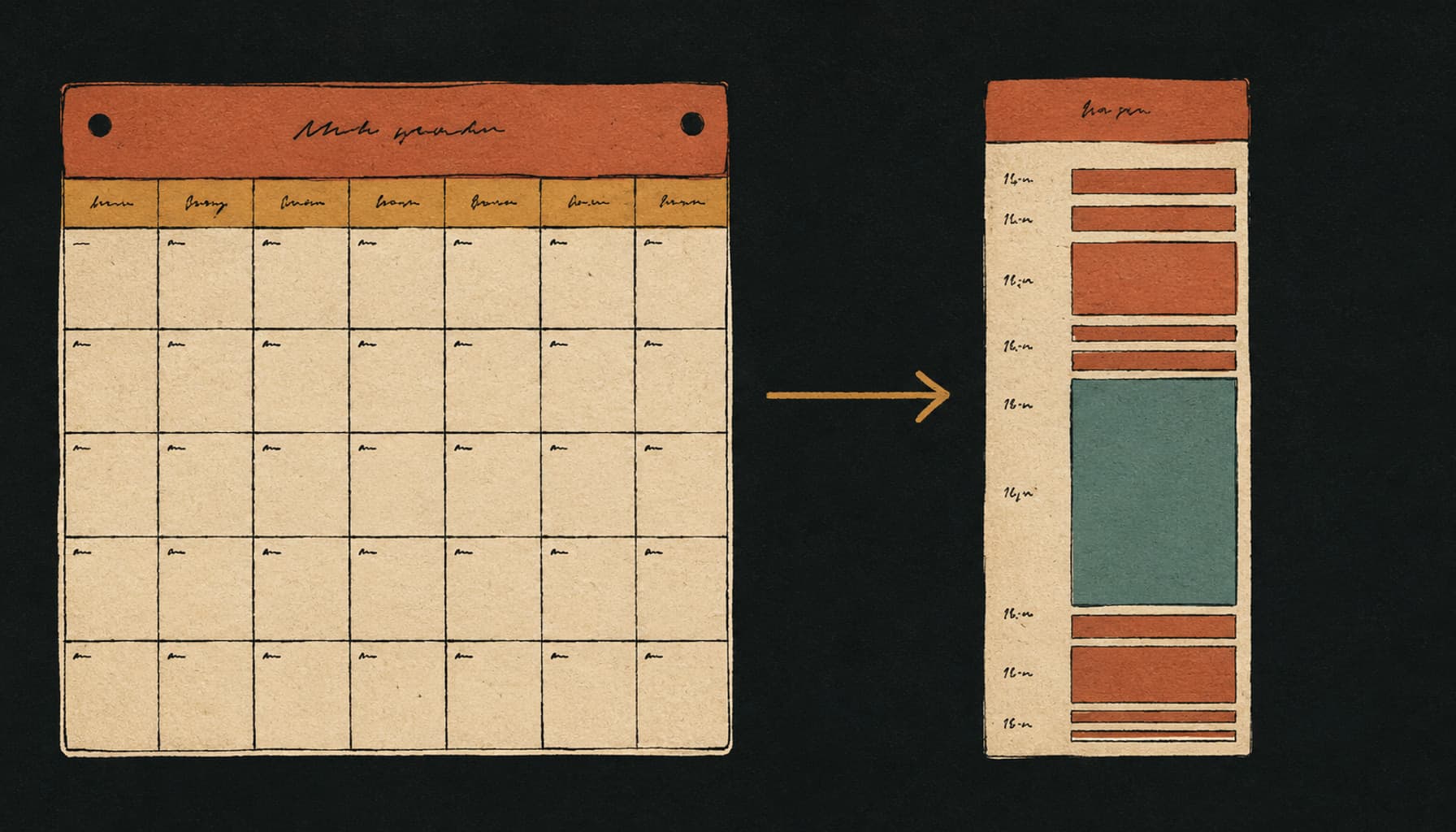
A calendar helps an ADHD brain by making time visible, not by holding more appointments. The four properties that decide whether one sticks, seven apps compared on what each gets right and where each breaks, and a twenty minute setup.
Most roundups rank ADHD apps by popularity, which tells you nothing about whether one fits the thing going wrong in your week. Eleven apps sorted by the six jobs they do, with what each one costs and where each one breaks.
Paper planners, task apps, timers, body doubling, AI assistants. A guide to what each category genuinely does for an ADHD brain, where each one fails, and how to screen a new tool before you adopt it.
Planning a working week is harder than planning your own life, because most of it isn’t yours. A weekly setup, a daily shape, and a re-entry routine for the weeks it all falls apart.
Standard to-do lists assume you’ll remember to look, feel the right urgency, and be able to start. Here’s how to build a list that doesn’t rely on any of those, and what to do when you fall off it.
A milestone is a checkpoint in time that marks real progress, not a task and not a deliverable. Here’s the plain definition, clear examples, and how to set milestones that actually keep a project on track.
A deliverable is any tangible output someone outside the work has to accept, not just an internal to-do. Here’s the plain definition, the types, and how to write one that’s trackable.
AI task managers turn plain English into organized, prioritized work, and some now act on it. Here’s what they really automate, and the one line worth drawing.
The industry is racing toward AI that just does things for you. For work you’re accountable for, that’s the wrong default. The case for AI that asks first.
Give Otto a try: your day, organized in seconds.
No credit card · Sign in with Google or email