
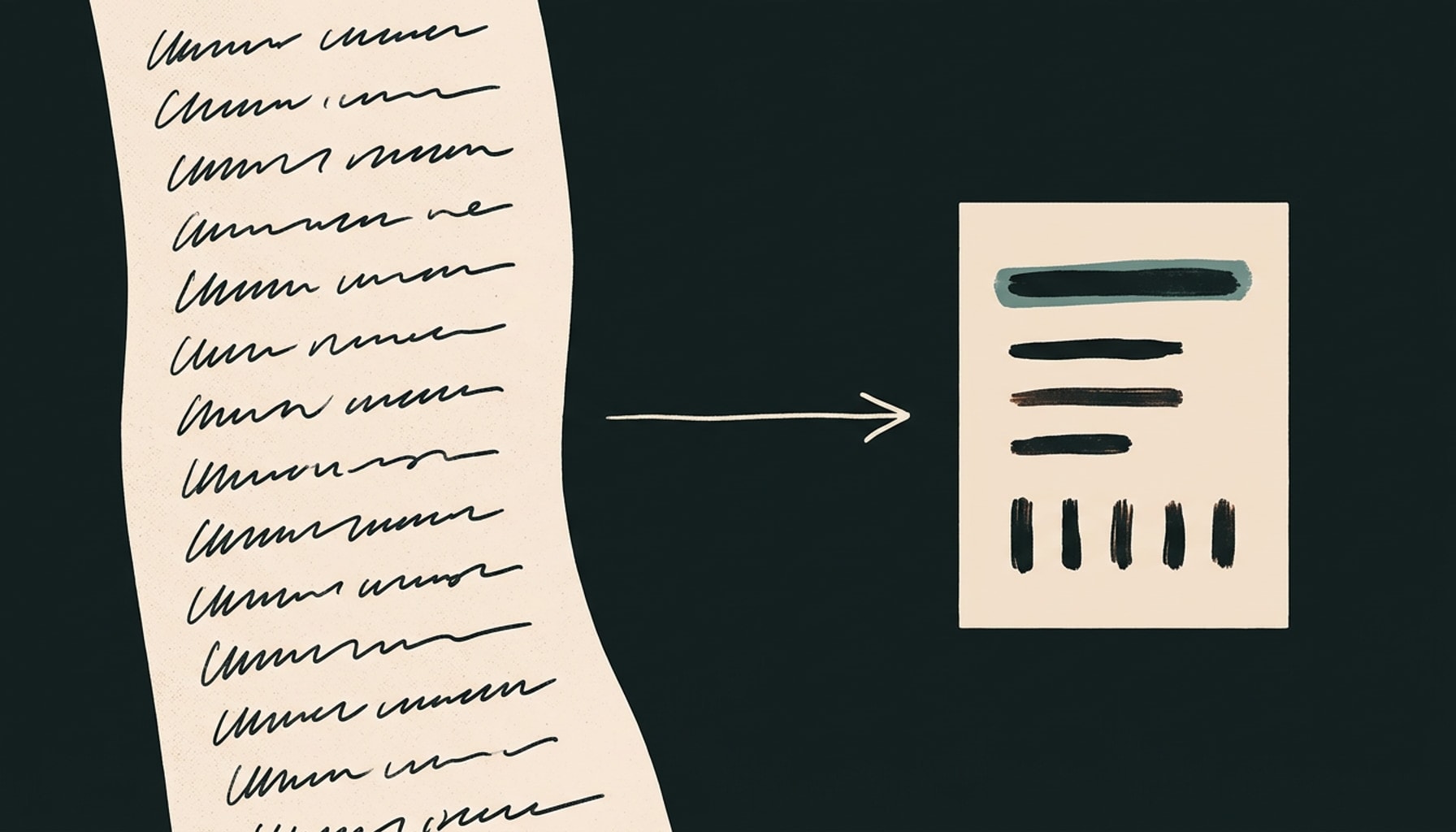
The 1-3-5 rule caps a day’s to-do list at nine items: one big task, three medium tasks and five small ones. The method was published by The Muse, which puts it plainly: accept that you can reasonably get one big thing, three medium things and five small things done, and keep the daily list to just those nine. The cap is the whole mechanism. Nine is not a measured number and no study has tested that split, but the two things the rule forces, choosing a smaller set and deciding in advance when each item happens, are both well evidenced. Here is how to run it, and when nine is the wrong number.
That last part is the bit missing from most write-ups of this method. A rule that survives contact with a real week has to say what to do on the day you are in meetings from ten until four, and the original article does say it. Everything below is either from that article, or from a primary source quoted and linked so you can check it.
“Accept that you can reasonably get one big thing, three medium things, and five small things done.”
What the 1-3-5 rule actually says
The 1-3-5 rule is a daily limit of nine to-do items, split one big, three medium, five small. The original article on The Muse carries an editorial byline and a 2020 update date, and it names no individual as the originator, so attribute the method to the publication rather than to a person. The article opens from the position that you cannot accomplish an endless number of things each day, and the nine item cap is what it proposes instead.
Three details in that source matter and are usually dropped when the 1-3-5 rule is repeated elsewhere.
- The cap is flexible by design. The article says so directly, and gives the example of a day spent largely in meetings needing the number of items cut down.
- Blank slots are allowed. For work where surprises arrive daily, the article suggests leaving some task slots empty to fill in as things come up.
- It is a daily selection, not a system of record. Nine items is what you commit to today. It is not everything you owe anyone, which has to live somewhere else.
Read that way, the 1-3-5 rule is a budget. You have one unit of deep attention, three units of moderate attention and five units of near zero attention to spend, and the rule makes you spend them on purpose before the day starts spending them for you.
Why a cap works, and why nine is not the reason
A cap on the daily list works because of a gap between what people plan and what people finish, and that gap has been measured. Buehler, Griffin and Ross asked psychology students at the University of Waterloo when they expected to finish their honours thesis. The average best estimate was 33.9 days. The work actually took 55.5 days, and only 29.7 percent of students finished inside their own prediction. When the same students were asked to predict assuming everything went as well as it possibly could, the average fell to 27.4 days and 10.8 percent hit it.
“Exploring the “planning fallacy”: why people underestimate their task completion times.”
That is a thesis rather than a Tuesday, but the direction holds at every scale, and it is the reason a list written with optimism runs out of day. A cap is a blunt correction for a bias you cannot think your way out of, which is what makes it useful: it does not ask you to estimate better, it just stops you writing twenty items.
What the cap is not justified by is the number nine. The nine item total is a usable round figure, and it is worth saying so clearly because a great deal of writing about the 1-3-5 rule implies otherwise. The nearest relevant measurement is of working memory, not of a day’s output: Nelson Cowan’s 2001 review in Behavioral and Brain Sciences put the central capacity limit at about four chunks, not nine.
“A single, central capacity limit averaging about four chunks is implicated along with other, noncapacity-limited sources.”
About four chunks is a limit on what you can hold in mind at once, which is an argument for writing the list down rather than an argument for any particular length of it. The practical read is that the one big thing plus three medium ones, four items, is the part of a 1-3-5 list you can actually carry in your head during the day. The five small ones are there to be read off a page, which is exactly how they should be treated.
Choosing the one big thing
The one big thing is the single task of two hours or more that you would be glad to have finished when the day ends. One is the hardest number in the method, because most days contain two or three candidates and the instinct is to list all of them and hope.
Three tests that make the choice quicker:
- The someone-is-waiting test. If exactly one of the candidates has another person blocked behind it, that is the one. Work that unblocks someone else buys back more time than work that only moves your own project.
- The tomorrow test. Ask which candidate is cheaper to do tomorrow. The one that gets more expensive by waiting goes today, and the other one is genuinely not today’s big thing.
- The first-step test. If you cannot name the first physical action for a candidate, it is not a task yet, it is a project. Naming that first step is often enough work for one slot on its own.
Then give the one big thing a start time and a place before the day begins, rather than an intention to get to it. This is the step with the strongest evidence behind it in the whole method. Gollwitzer and Sheeran’s meta-analysis across 94 independent tests found that specifying in advance when, where and how you will act, in an if-then form, had an effect of medium-to-large size on whether the goal was reached, d = .65.
“Findings from 94 independent tests showed that implementation intentions had a positive effect of medium-to-large magnitude.”
So the one big thing is not “finish the proposal”. It is “9:30, at the desk, proposal until 11:30”. The 1-3-5 rule gives you the slot. The if-then detail is what gets it started.
The three medium ones
A medium task runs roughly 30 to 60 minutes and needs attention but not a clear run at it. In practice the three medium slots are where a day is usually lost, for one reason: most people fill them with tasks that are actually big ones in disguise.
Two rules keep the medium slots honest. First, if a task has ever taken you more than an hour before, it is a big task and it does not fit here, however small it feels while you are writing the list. Second, if a medium task is blocked on someone else’s reply, the medium task is not the work, it is the chase. Write it as the chase, which takes four minutes, and move the actual work to the day the reply arrives.
The three medium items are also the right place for the thing you have been avoiding for a fortnight, and an hour is usually enough to find out whether it is avoidance or a genuinely bigger piece of work than you thought. Either answer is worth having.
The five small ones
A small task takes under 15 minutes and needs no warm-up: a reply, a booking, a form, a payment, a message you owe someone. Five of them is roughly an hour, which is the amount of admin a working day absorbs without complaint.
The five small slots do one job the rest of the list cannot. Small tasks are the ones that generate the low-grade background noise of an unfinished list, and that noise has been studied. Masicampo and Baumeister found that unfulfilled goals kept intruding on thought and interfering with unrelated tasks, and that the intrusions stopped once a specific plan existed for them.
“Forming plans for one’s tasks thus eliminated Zeigarnik intrusions.”
The practical version: putting a small task in one of the five slots is itself the plan, and that is what buys the quiet, not finishing it. A task with a named day stops nagging, which is why the five slots are worth filling deliberately rather than leaving as a catch-all for whatever arrives. Batch them into one run late in the day, when attention is lowest and fifteen minute jobs are the only ones still achievable.
The 1-3-5 template to copy
This is the 1-3-5 rule as a form you can paste into paper, a notes app or a task manager. It takes about five minutes at the start of a day, or ten the evening before, which is better. The blank slots are deliberate and come straight from the source article’s advice about reactive work.
DATE: ____________

ONE BIG THING  (2 hours or more. Pick one. Not two.)
[ ] ____________________________________________
    Starts at: ______   Where: ______________
    First physical step: ___________________

THREE MEDIUM  (30 to 60 min each. Nothing that has ever taken an hour.)
[ ] ____________________________________________
[ ] ____________________________________________
[ ] ____________________________________________

FIVE SMALL  (under 15 min each. Batch them in one run.)
[ ] ______________________   [ ] ______________________
[ ] ______________________   [ ] ______________________
[ ] ______________________
    Batch run at: ______

MEETINGS TODAY: ______ hours
  3 hours or more? Drop to 1 big OR 2 medium, and 3 small.
  5 hours or more? One medium and two small. That is the honest day.

LEAVE BLANK ON PURPOSE  (reactive work, per the original rule)
[ ] reserved   [ ] reserved

NOT TODAY  (the overflow has to have a home)
- ______________________________________________
- ______________________________________________

END OF DAY, 60 SECONDS
Finished: ___ / 9
What took longer than its slot: _________________
Tomorrow's one big thing: ______________________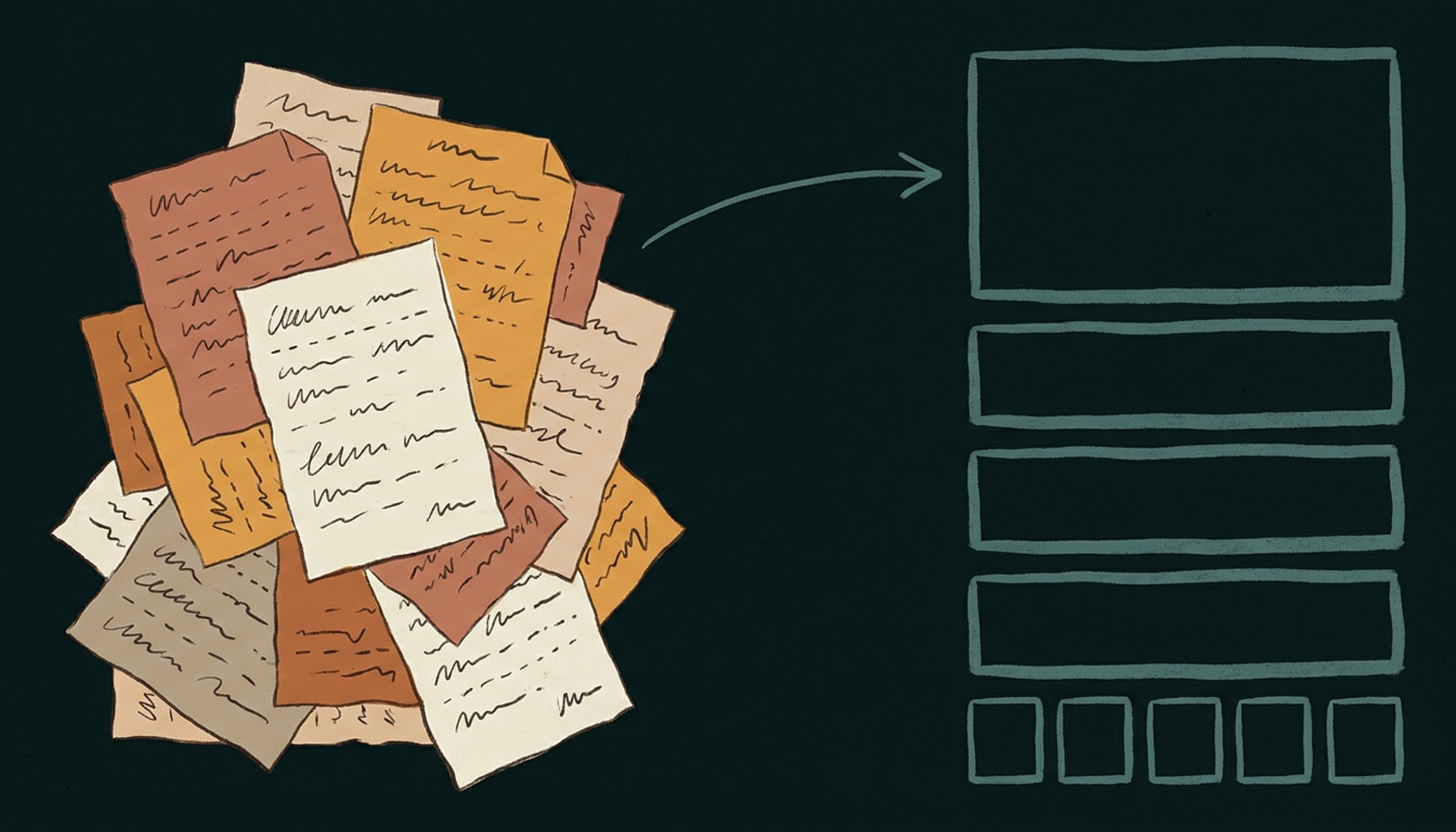
When nine is the wrong number
Nine items assumes a day with most of its hours available, and plenty of days are not that. Keeping the 1-3-5 shape while shrinking the counts is better than abandoning the method, because the shape is what does the work: one thing that matters, a few that move, a batch of small ones.
| Your day | What to run instead | Why |
|---|---|---|
| 3 or more hours of meetings | One big thing OR two medium, plus three small | The original article says to cut the count on a meeting-heavy day. Two hours of fragments is not two hours of attention. |
| 5 or more hours of meetings | One medium and two small | There is no two hour block to spend, so a big thing on the list is a lie you will discover at four o’clock. |
| Reactive role (support, ops, on call) | 1-3-5 with two slots left blank | The source article suggests leaving slots empty to fill as things come up. Blank slots absorb surprises without breaking the cap. |
| Part day, school run, appointment | Halve it: one medium, three small | Scale with available hours, not with ambition. A half day with a full list fails at the same point every time. |
| Deep project week, few interruptions | One big thing, one medium, three small | Fewer, longer blocks beat nine items when the big thing is genuinely the week’s point. |
| Backlog clearing day | Ten to fifteen small, no big thing | A deliberate admin day is a legitimate shape. The mistake is doing one by accident on a day you meant to write something. |
1-3-5 against four other methods
The 1-3-5 rule is often presented as an alternative to the other popular methods, and it is mostly not. It caps volume, and most of the others sort or schedule. Knowing which job each one does makes it obvious why combining two of them works better than switching between them every few months.
| Method | What it does | What it does not do | Pairs well with 1-3-5? |
|---|---|---|---|
| The 1-3-5 rule | Caps the day at nine items, sized one big, three medium, five small | Does not tell you which items deserve a slot, and does not schedule them | n/a (this is the cap itself) |
| Eisenhower matrix | Sorts a pile by urgency and importance | Does not reduce volume. A sorted pile of thirty is still thirty | Yes. Sort with the matrix, then take one big, three medium and five small off the top |
| Most Important Tasks (MIT) | Names two or three must-finish items for the day | Says nothing about the admin, which then arrives unplanned | Largely the same idea. 1-3-5 is MIT with the small work made explicit |
| Time blocking | Assigns each item a slot in the calendar | Does not stop you blocking out more hours than the day has | Yes, and this is the strongest pair: 1-3-5 chooses, time blocking places |
| Getting Things Done (GTD) | Captures everything and organises it into contexts and next actions | Deliberately has no daily cap, which is where many people stall | Yes. GTD holds the full record, 1-3-5 is the daily pull from it |
If you want the longer version of the choosing problem rather than the capping problem, our piece on Pareto principle examples with the numbers checked covers what the 80/20 framing does and does not support, and productivity tips for work goes through the habits that survive a bad week.
Six ways a 1-3-5 list breaks
The 1-3-5 rule fails in a small number of predictable ways, and five of the six are about sizing rather than about discipline.
- The big thing is a project. “Launch the site” is not a task and will sit in the big slot for three weeks. If it has no single first physical action, the real big thing is deciding what that action is.
- The medium ones are big ones. Three hour-long tasks that are really two hours each means a six hour list in three slots. Use your own past times, not your estimate of them, and remember the 1994 finding: the honest multiplier on a confident estimate is closer to 1.6 than to 1.
- Meetings are treated as free. Four hours booked plus a nine item list is an eleven hour day. Count the meetings first and build the list in what is left.
- There is no backlog. If the overflow has nowhere to go, the cap turns into three competing lists within a fortnight and the method quietly stops existing.
- The list is written in the morning, in a hurry. Written the evening before, the choice of the one big thing is a decision. Written at nine the next morning, it is whatever is loudest in your inbox.
- Nine becomes a quota. The cap is a ceiling, not a target. A day with one big thing finished and nothing else is a good day, and padding to nine to feel productive is how a cap turns back into a long list.
What the evidence supports, and what it does not
The 1-3-5 rule has not been tested. There is no trial, no cohort study and no completion rate for it, so any page quoting a percentage for the 1-3-5 rule specifically is quoting something nobody measured. What can be said is which of the method’s moving parts rest on published research, and that is worth laying out explicitly.
| Claim | Supported? | Primary source |
|---|---|---|
| People plan more into a period than fits | Yes | Buehler, Griffin & Ross, JPSP, 1994. Predicted 33.9 days, actual 55.5, and 29.7% finished on time. |
| Attaching a when and a where raises follow-through | Yes | Gollwitzer & Sheeran, AESP, 2006. 94 independent tests, d = .65. |
| An unfinished task stops nagging once it has a plan | Yes | Masicampo & Baumeister, JPSP, 2011. Plans eliminated the intrusions from unfulfilled goals. |
| You cannot hold a long list in your head | Yes, and the limit is about four | Cowan, BBS, 2001. Central capacity limit averaging about four chunks. |
| Nine is the right daily number | No evidence either way | Nine comes from The Muse as a usable figure, and the same article says to flex it. |
| The 1-3-5 rule beats other daily methods | Untested | No comparative study of the 1-3-5 rule exists as of October 2026. |
Read down that table and the honest summary of the 1-3-5 rule is this: it is a sensible packaging of three well-supported ideas, with an arbitrary number on the front. That is not a criticism. An arbitrary cap you keep beats a principled one you abandon, and the number being arbitrary is precisely why you should feel free to change it.
Where Taskly fits
Taskly is a task manager rather than a 1-3-5 app, and the method does not need one. What it does need is somewhere the nine items and the backlog can be the same list, so that choosing today’s nine is a selection rather than a retyping exercise.
- Sizing and splitting is one request. Paste the backlog and ask Otto, our assistant, to size each item, split anything holding two actions, and propose a one big, three medium, five small set for tomorrow.
- Nothing changes without your approval. Otto shows every proposed change as a before and after you accept or discard, so a proposed 1-3-5 split is a suggestion you sign off rather than a rearrangement that happens to your list.
- Today is a separate view from everything. The nine items are visible without the other forty, which is the only way a cap means anything.
- Recovery is one move. “Push what I did not finish to Thursday” is one request and one approval, not nine edits, which matters because the 1-3-5 rule generates leftovers by design.
- No streaks and no productivity score. Nothing that makes a nine out of nine day feel like the standard.
What Taskly cannot do, plainly. Taskly has no offline mode, so a list built on a train happens on paper. There are no native mobile apps yet, so Taskly runs in a browser. There is no calendar layout, so if the one big thing only becomes real to you when you can see it as a two hour block on a timeline, Taskly is not that, and a visual planner will serve you better. The integration surface is small, so Taskly will not assemble your nine items out of five other tools. And Otto is a good sizer rather than an oracle: it has no idea which of your three candidate big things has a person waiting behind it, so that choice stays yours.
If you are weighing the assistant part, the AI to-do list page covers what to check before trusting any tool with your list, the personal task manager page covers the individual case, and what an AI task manager is covers the category rather than the product.
The short version
The 1-3-5 rule caps the day at one big task, three medium and five small, and the cap is the point. Choose the one big thing by asking who is blocked behind it, give it a start time and a place rather than an intention, keep the medium slots free of disguised big tasks, batch the five small ones into a single late run, and send everything else to a backlog that genuinely exists. Count your meetings before you count your tasks, and cut the numbers on a booked day, which the original rule tells you to do. Nine is not a finding and nobody has tested it, so treat it as a starting cap and adjust it after a fortnight of watching what you actually finish. The parts that are findings, that a day holds less than you predict and that an intention with a when and a where attached is far more likely to happen, are the parts worth keeping whatever number you settle on.